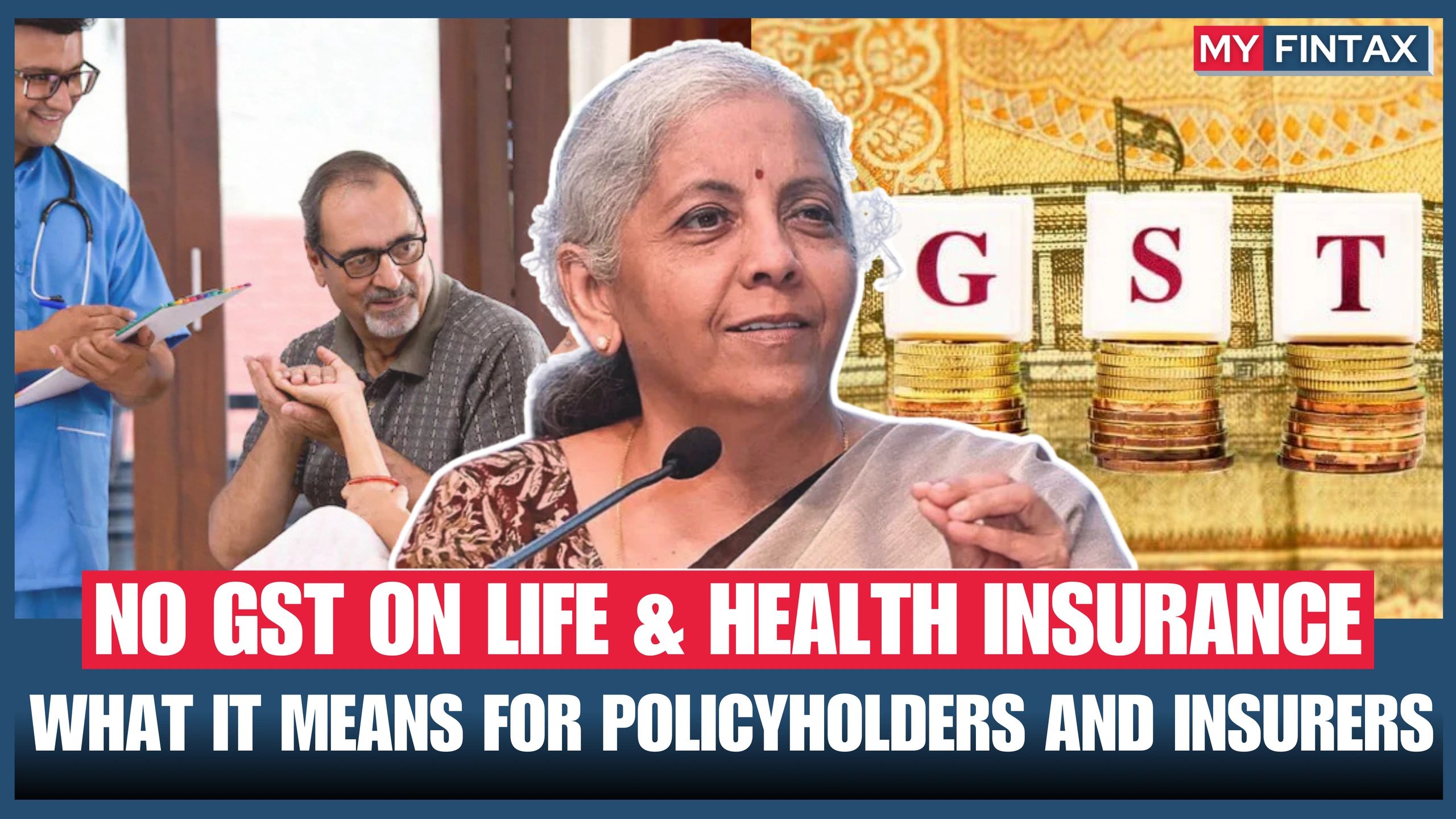
Current position — reviewed 22 August 2026
This reform is now in force. The GST exemption on individual life and health insurance premiums took effect on 22 September 2025 and continues to apply.
All individual life insurance and individual health insurance policies, including reinsurance of such policies, are taxed at Nil GST instead of the earlier 18%.
Because the supply is exempt, insurers cannot claim input tax credit on the related inputs and input services, which is why the full 18% saving may not always appear in the premium quoted.
The exemption covers individual policies; group and corporate covers follow their own classification, so check the policy type before assuming a Nil rate.
The change was part of the rate rationalisation approved at the 56th GST Council meeting, alongside the move to a 5% and 18% two-slab structure with a 40% de-merit rate.
The government’s recent decision to scrap the Goods and Services Tax (GST) on individual life and health insurance premiums marks one of the most significant reforms for India’s insurance sector in recent years. While consumers are set to enjoy direct financial relief, insurers are preparing to absorb higher operational costs due to the loss of input tax credit (ITC).
Why the Move Matters
Insurance has always been seen as an essential financial safety net, but affordability has been a key barrier in India. Until now, insurance premiums attracted 18% GST, making policies more expensive and discouraging many families from purchasing adequate coverage. Industry representatives had lobbied for years to reduce GST to 5%. Instead, the government went a step further—completely exempting life and health insurance premiums from GST.
This reform not only makes policies cheaper but also aligns with the government’s broader objective of increasing financial security and healthcare protection for citizens.
Direct Benefits to Consumers
For individuals, this exemption translates into lower premium payments across a wide range of products:
- Protection Plans: Term life insurance, family floaters, and senior citizen plans will see cost reductions.
- Health Insurance: Retail health plans, including individual and family coverage, will now become more affordable.
- Investment-Linked Policies: Unit-linked insurance plans (ULIPs) and endowment/traditional policies will also carry lower costs, though the extent of relief may vary.
Industry experts believe this move will not only attract first-time buyers but also encourage existing policyholders to increase their coverage without raising their budgets. In a country where insurance penetration remains under 4% and healthcare costs continue to rise at double-digit rates annually, this could prove transformative.
Insurers Brace for Cost Pressures
While consumers celebrate, insurers are recalculating their balance sheets. Under the GST regime, companies could claim input tax credits on various expenses such as IT services, professional fees, and office rentals. With the exemption in place, these costs will now have to be absorbed by insurers.
According to Tapan Singhel, Managing Director and CEO of Bajaj Allianz General Insurance, the impact of ITC loss could range from 3–8% depending on the scale of retail health business each company handles. However, he added that the net consumer benefit would still remain “very significant.”
Gaurav Gupta, CEO of CarePay, explained that while policyholders will see meaningful premium relief, it may not reflect the full 18% reduction. For ULIPs in particular, where the investment portion limits the tax impact, the benefit may be smaller.
Balancing Costs with Regulation and Competition
Insurers’ ability to hike prices in response to higher costs is limited. The Insurance Regulatory and Development Authority of India (IRDAI) has capped insurers’ expenses of management (EoM) at 30%, ensuring operational discipline. At the same time, stiff competition in the insurance market prevents companies from arbitrarily increasing premiums.
That said, insurers may gradually make marginal adjustments to base premiums in the medium to long term as pricing cycles evolve.
Potential Ripple Effect on Healthcare Costs
The benefits may extend beyond just lower premiums. If hospitals and healthcare providers also pass on GST relief to patients, medical claim costs could decline significantly. This would indirectly reduce insurers’ payout burden and help maintain affordable pricing in the long run.
The Bigger Picture
The GST exemption comes at a time when India is facing twin challenges: low insurance penetration and rising healthcare costs. By lowering the cost of entry, the reform could encourage millions of households to protect themselves financially.
For insurers, while there will be short-term cost pressures, the move also presents a long-term growth opportunity. A wider customer base, deeper penetration into rural and semi-urban markets, and increased awareness of financial protection could ultimately strengthen the industry.
Conclusion
The removal of GST on life and health insurance is a landmark reform that strikes a balance between consumer welfare and industry growth. While policyholders will enjoy immediate cost savings, insurers will need to navigate higher input costs and tighter margins. Over time, however, this change could create a more resilient and inclusive insurance ecosystem—ensuring that financial protection is not a luxury, but a necessity accessible to all.


-5a5ea37.png)